The art of a great branded MOGRT is giving editors enough freedom to tell the story while making it nearly impossible to go off-brand. Too much freedom and every video looks different; too much lockdown and the template is useless. The sweet spot is curated flexibility: open up the things that should change, and quietly fence off the things that should not.
The tension, stated plainly
Bought stock templates sit at one extreme. They are flexible and cheap, but generic and off-brand, and they rarely match your colors, fonts or formats. Over-locked templates sit at the other extreme, so rigid that editors cannot do their job. Neither serves a brand that publishes a lot of video. The answer is a template that is opinionated about your brand and relaxed about everything else.
Lock what must not change
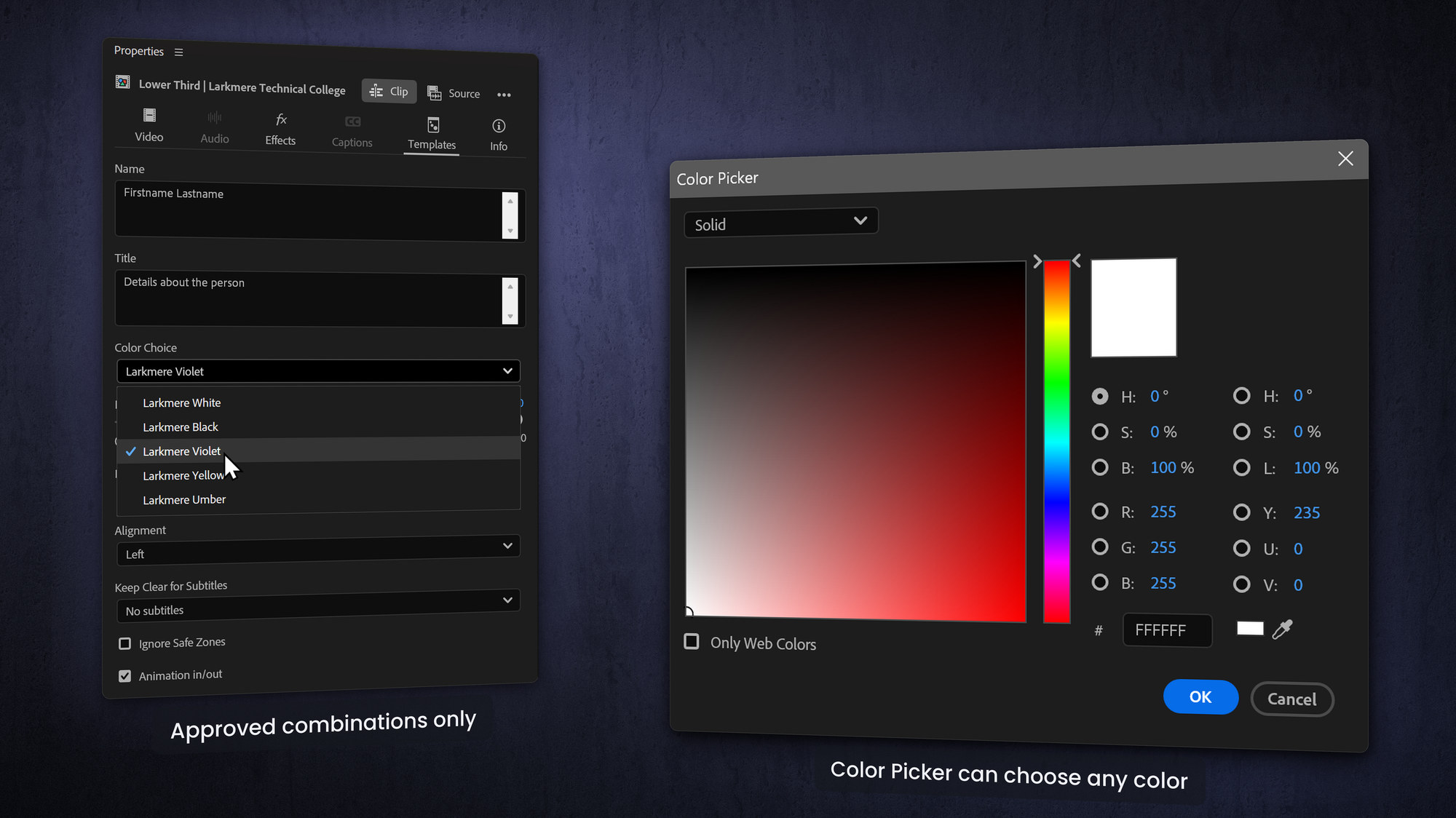
Brand colors, fonts and the logo are not creative decisions an editor should remake on every clip, so take them off the table. Expose colors as curated dropdown menus drawn straight from the design manual rather than an open color picker, so every choice is already on-brand. Lock the fonts. And Universalize the controls so the labels work in any language version of Premiere your team or partners use.
Flex what should change
Then be generous with the things that genuinely vary from clip to clip: the text, the media (drag-and-drop replacement makes this painless), the format, optional elements that can be switched on or off, and the length of the clip, within the guardrails of Responsive Design - Time. That is plenty of room to tell any story without ever touching the brand.
Curated choice beats open choice
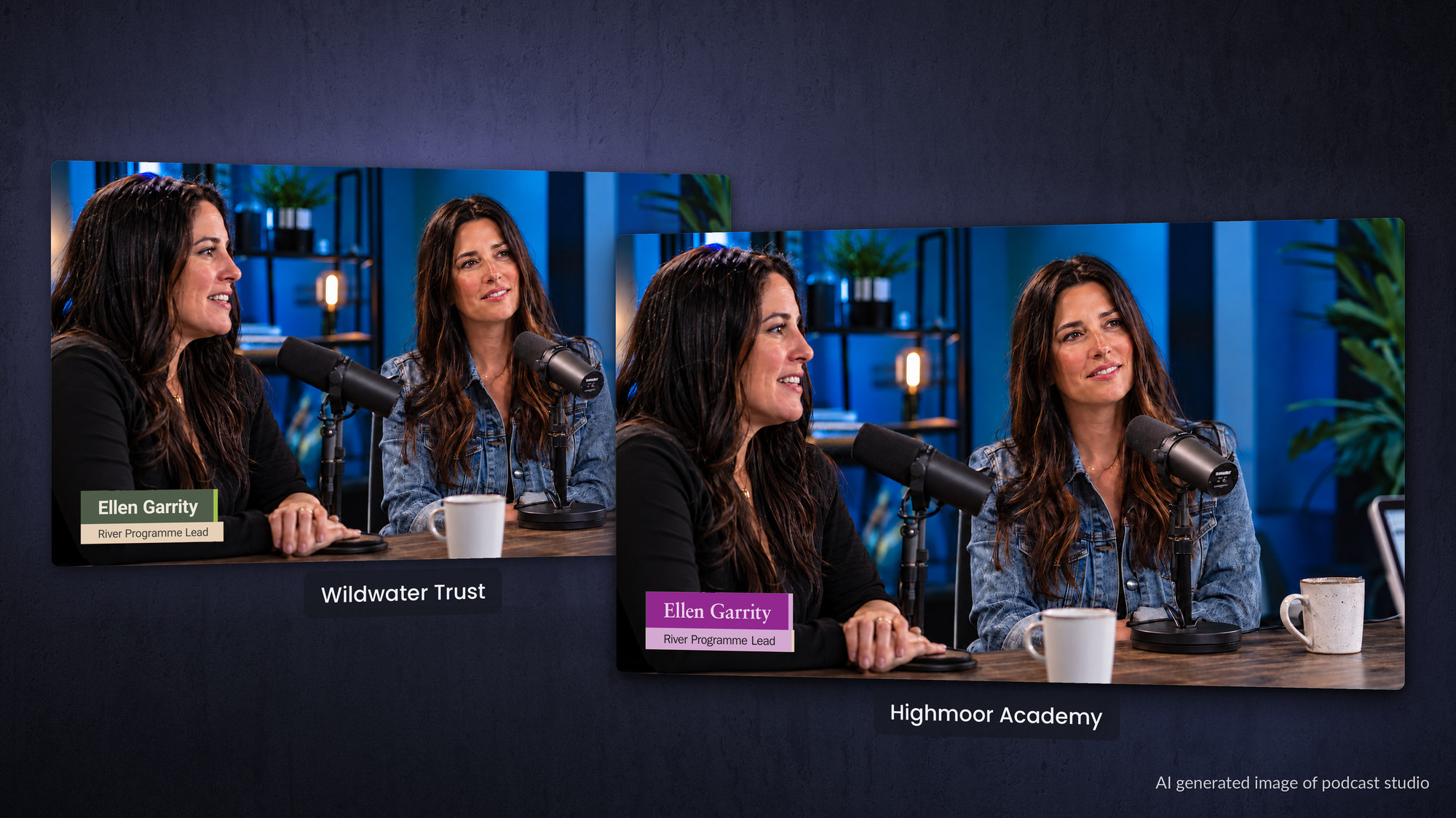
This is the principle that makes it all work. Offering five approved color combinations in a dropdown is better than handing over a color wheel. The editor still chooses, but every option is correct. Curated choice keeps things clear, and clarity is what lets non-designers produce designer-quality results. It is also why too many options backfires: more freedom often means more ways to look off-brand.
When the brand evolves
Brands change. New palette, refreshed logo, a sub-brand for a campaign. The clean way to handle this is to keep the building blocks identical and only swap what changed. Because a well-built package can link its colors to a simple JSON or CSV file, you can reissue the same template set with new color combinations or an updated logo, and editors keep working with the exact tools they already know. With MOGRTizer, that is literally a re-order: same package, new brand values, no retraining.
Consistency is what scales your team
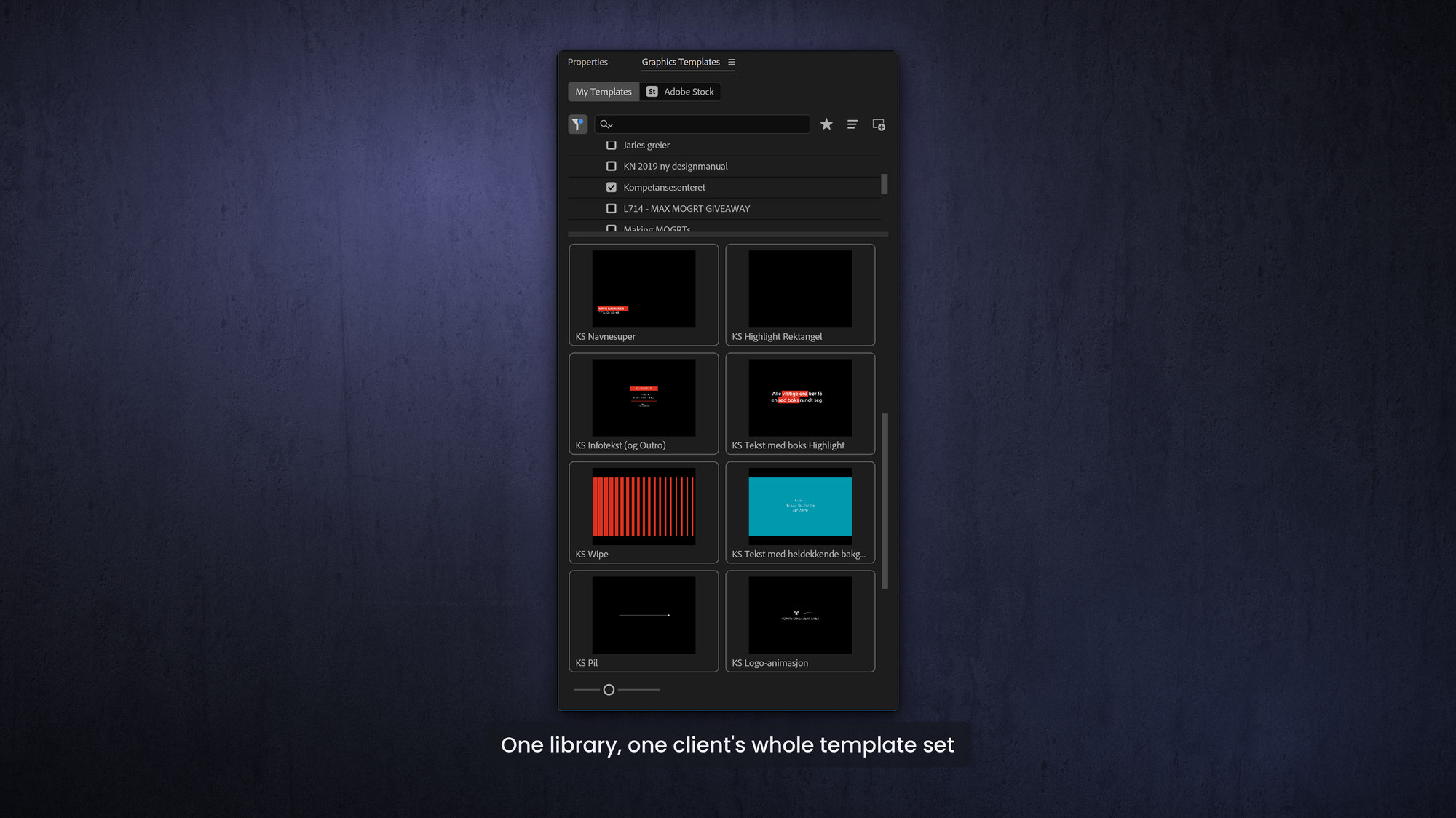
The real prize is that locked brand assets let you scale beyond your in-house editors. Invite freelancers and agencies into the same shared library and they get the same templates your staff use, so the output looks identical no matter who is on the keyboard. Brand fidelity stops being something you police after the fact and becomes something the templates guarantee up front.
Frequently asked questions
How do I keep freelancers and agencies on-brand?
Give them the same brand-locked templates through a shared library. When colors, fonts and logo are baked in, outside editors produce the same on-brand look as your in-house team.
Should I let editors pick any color in a MOGRT?
Usually no. Offer a curated set of approved colors in a dropdown instead of an open color picker. Every choice stays on-brand and the template is easier to use.
How do I update templates when our branding changes?
Rebuild from the same building blocks and swap only what changed. If colors are linked to a JSON or CSV file, you can reissue the package with new values and keep the controls familiar.
What is the difference between stock and branded MOGRTs?
Stock templates are generic and rarely match your brand or formats. Branded templates are locked to your colors, fonts and logo and built for your aspect ratios.